


If you work in digital marketing, you have probably heard the phrase ‘cookieless future’ more times than you can count. However, many marketers still aren’t sure what it actually means for their day-to-day work. The truth is, third-party cookie deprecation is one of the biggest shifts in online advertising in the last decade. Therefore, understanding it now — before it fully hits — can give you a serious edge over your competitors.
- What Are Third-Party Cookies, and Why Are They Going Away?
- What Happens When Third-Party Cookies Go Away?
- First-Party Data vs. Third-Party Data: Understanding the Difference
- How to Prepare for the Cookieless Future: Your Action Plan
- Cookie Alternatives for Marketers Worth Knowing
- Is the Cookieless Future Really a Threat?
- Final Thoughts: Start Your Transition Now
So, what exactly is happening? And more importantly, how do you prepare? In this article, you will get a clear, simple breakdown of everything you need to know about the cookieless future and the marketing strategies that will help you thrive in it.
What Are Third-Party Cookies, and Why Are They Going Away?
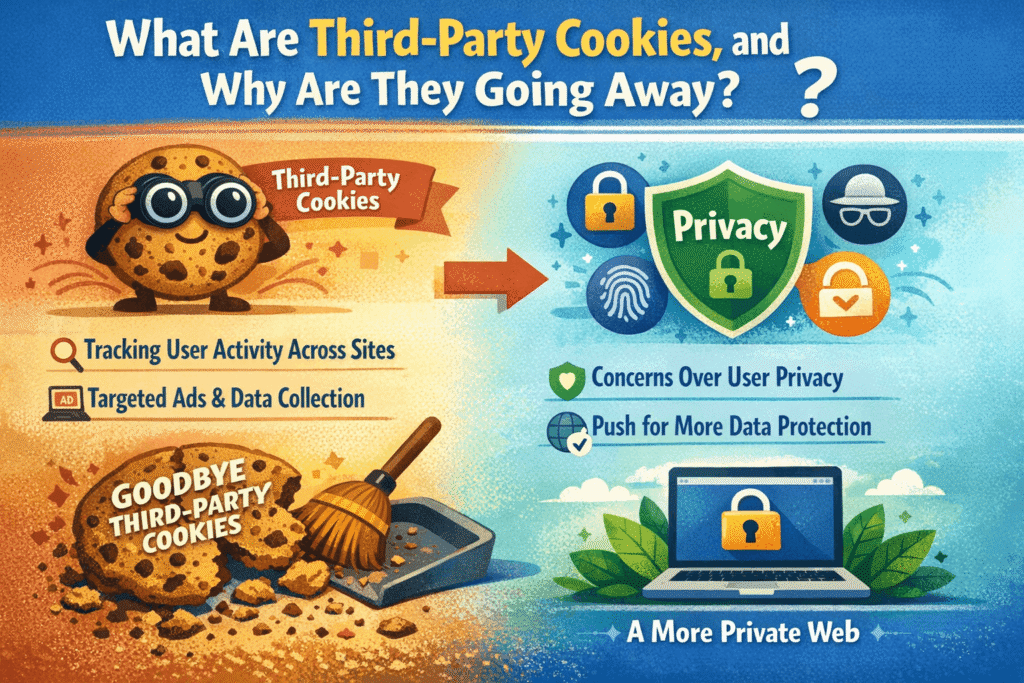
First, let’s make sure we are on the same page. A third-party cookie is a small piece of data that a website stores on your browser — but it was placed there by someone other than the site you are visiting. For example, an ad network can track your behavior across dozens of websites using these cookies. As a result, advertisers can build a detailed profile of your interests and serve you targeted ads.
For years, this system worked well for marketers. However, it came at a big cost to user privacy. Consumers began to push back, and regulators followed. GDPR and cookies regulations in Europe, along with similar laws in other regions, made it harder for brands to collect data without clear user consent. Because of this, major browsers started taking action.
Safari and Firefox blocked third-party cookies years ago. Meanwhile, Google announced its own Google cookie phase-out through Chrome — the world’s most popular browser. Although Google has delayed its timeline several times, the direction is clear: third-party cookies are on their way out. Consequently, the way you track, target, and measure audiences is about to change permanently.
Get 20% off all Pryntago.com goods using our code: WTM20
What Happens When Third-Party Cookies Go Away?
This is the question every marketer is asking. When third-party cookies disappear, several things happen at once — and not all of them are bad. Here is what you can expect:
To begin with, cross-site tracking becomes much harder. You will no longer be able to follow a user from one website to another and serve them ads based on that behavior. Retargeting campaigns, as you know them today, will need to evolve significantly.
Furthermore, audience segmentation will be less precise. Without the rich behavioral data that third-party cookies provide, building detailed audience profiles will require new approaches. Additionally, attribution modeling — knowing which touchpoint led to a conversion — will become more complex and less accurate under the old systems.
On the other hand, this shift levels the playing field. Brands that invest in first-party data now will have a significant advantage over those that don’t. In fact, how cookie deprecation affects digital marketing depends largely on how prepared you are today.
First-Party Data vs. Third-Party Data: Understanding the Difference
Before diving into solutions, it helps to understand the key distinction between these two types of data. Third-party data is collected by someone outside your organization — like an ad network or data broker. In contrast, first-party data is information you collect directly from your own audience.
First-party data includes things like email addresses, purchase history, website behavior, and survey responses. Because your audience gave you this data directly, it is more reliable, more accurate, and far more privacy-compliant. Moreover, it will not disappear when Google completes its cookie phase-out.
The difference between first-party data vs. third-party data is essentially the difference between a relationship you own and one you rent. Going forward, owning that relationship will be everything in digital advertising without cookies.
You can also check this article about List Of The Best Proven Email Marketing Tools In 2026
How to Prepare for the Cookieless Future: Your Action Plan
The good news is that there are clear, proven steps you can take right now. Below, you will find the most important marketing strategies without third-party cookies that forward-thinking brands are already using.
1. Build a Strong First-Party Data Strategy
Your first-party data strategy is the foundation of everything else. Start by auditing what data you currently collect and identify the gaps. Then, create meaningful incentives for users to share their information with you voluntarily. For instance, loyalty programs, gated content, personalized newsletters, and interactive tools all encourage data sharing in a transparent and trustworthy way.
Additionally, make sure your CRM is properly set up to store, segment, and activate this data across your marketing channels. The more organized your first-party data is, the more powerful it becomes.
2. Explore Contextual Advertising
Contextual advertising 2025 is experiencing a major comeback, and for good reason. Instead of targeting users based on their browsing history, contextual advertising places your ads next to relevant content. For example, a running shoe ad appears on a fitness blog — no personal data required.
Not only does this approach respect user privacy, but research also suggests it can perform just as well as behavioral targeting. Therefore, adding contextual advertising to your media mix is a smart move right now.
3. Invest in Email Marketing and Owned Channels
Email remains one of the most powerful tools in cookieless advertising. Since your email list is entirely first-party data you own, it is completely unaffected by cookie deprecation. As a result, now is a great time to double down on growing and nurturing your list.
Similarly, SMS marketing, push notifications, and your own app are all owned channels that give you a direct line to your audience without relying on third-party data. These channels also tend to have higher engagement rates, which is an added bonus.
4. Test Google Privacy Sandbox Solutions
Google has not simply removed cookies and left marketers with nothing. Instead, the company developed the Google Privacy Sandbox — a set of new technologies designed to allow interest-based advertising without tracking individuals across the web. One of its earlier proposals was FLoC (Federated Learning of Cohorts), though this was eventually replaced by a newer FLoC alternative called the Topics API.
While these tools are still evolving, it is worth testing them in your campaigns. Furthermore, staying up to date with the Privacy Sandbox roadmap will help you adapt quickly as the technology matures.
5. Embrace Privacy-First Marketing as a Brand Value
One of the most powerful shifts you can make is to see privacy-first marketing not as a limitation, but as a competitive advantage. Consumers today are more aware of how their data is used than ever before. Brands that are transparent, honest, and respectful of user privacy build deeper trust — and trust drives loyalty.
Moreover, leading with privacy can become a genuine part of your brand story. Telling your audience clearly how you protect their data and why you respect their choices is a message that resonates strongly in today’s environment.
You can Also check our latest tools and assets in our Store
Cookie Alternatives for Marketers Worth Knowing
Beyond the strategies above, there are several specific cookie alternatives for marketers that are gaining traction in the industry. Here are a few worth adding to your toolkit:
Universal IDs (like The Trade Desk’s Unified ID 2.0) allow advertisers to identify users across the web based on hashed email addresses collected with consent. While not perfect, these tools offer a more privacy-compliant path to audience targeting.
Server-side tracking is another growing option. Rather than relying on browser cookies, you send data directly from your server to your analytics and ad platforms. As a result, you get more accurate, more reliable data that is not blocked by browser restrictions.
Clean rooms — privacy-preserving environments where two parties can match data without exposing individual records — are also becoming popular in data privacy marketing. These allow brands to collaborate with publishers and platforms while keeping user data protected.
Is the Cookieless Future Really a Threat?
Not necessarily. While the third-party cookie deprecation does create real challenges, it also creates real opportunities. Brands that have relied too heavily on cheap, cookie-based retargeting will need to rethink their approach. However, this forces a healthy shift toward more creative, relationship-driven marketing.
In addition, the brands that invest now in first-party data, owned audiences, and privacy-first practices will be in a much stronger position than their competitors. Rather than seeing this as a threat, think of it as a chance to build something more durable.
Final Thoughts: Start Your Transition Now
The death of third-party cookies is not a future problem — it is a present reality that is already reshaping the digital advertising landscape. Therefore, the sooner you start building your first-party data strategy and exploring cookieless advertising solutions, the better positioned you will be.
To summarize, here is what you should focus on: build your first-party data assets, explore contextual advertising, invest in owned channels, test Google Privacy Sandbox tools, and lead with a privacy-first mindset. Each of these steps moves you closer to a marketing strategy that does not depend on borrowed data or borrowed time.
Ultimately, the cookieless future rewards marketers who put genuine relationships with their audience first. And honestly, that is not such a bad place to be.


